









Printers
Label makers and label printers
Adhesives
- Automotive
- Sanding - Polishing
- One sided adhesive tapes
- Packing tapes
- Coloured - marking tapes
- Electrical tapes
- Office tapes, adhesive tapes
- Slick surface tapes
- Metal adhesive tapes
- Masking crepe tape
- Masking special tapes
- Surface protection tapes
- Foam - sealing tapes
- Anti-slip tapes
- Self-adhesive rubber cut-outs
- Special tapes
- Textile tapes
- Warning and reflective tapes
- Double-sided adhesive tapes
- Electrical insulation material
- Glues
- Materiály pro výrobu technických štítků
- Flexible stoppers, bumpers
- Velcro straps
- Primers - activators - cleaners
- Accessories for adhesives, applicators
Computers and accessories
 Monitors
 Laptops
 Desktop computers
- Accessories
- Backpacks and laptop bags
- Electronic gadgets
- Ergonomic accessories
- External drives
- Gamepads
- Gaming tables
- Gaming chairs
- Microphones
- Internal drives
- Cables
- Office chairs
- Keyboards
- Mice
- Power supplies
- Memory cards
- Mouse pads
- Markers
- Projectors and accessories
- Mobile phone accessories
- Speakers
- Keyboard and mouse sets
- Headphones
- USB Flash discs
- Gaming steering wheels
- Scales
- Webcams
back to list
Spectrum 80727 3D filament, PCTG CF10, 1.75mm, 500g, Black
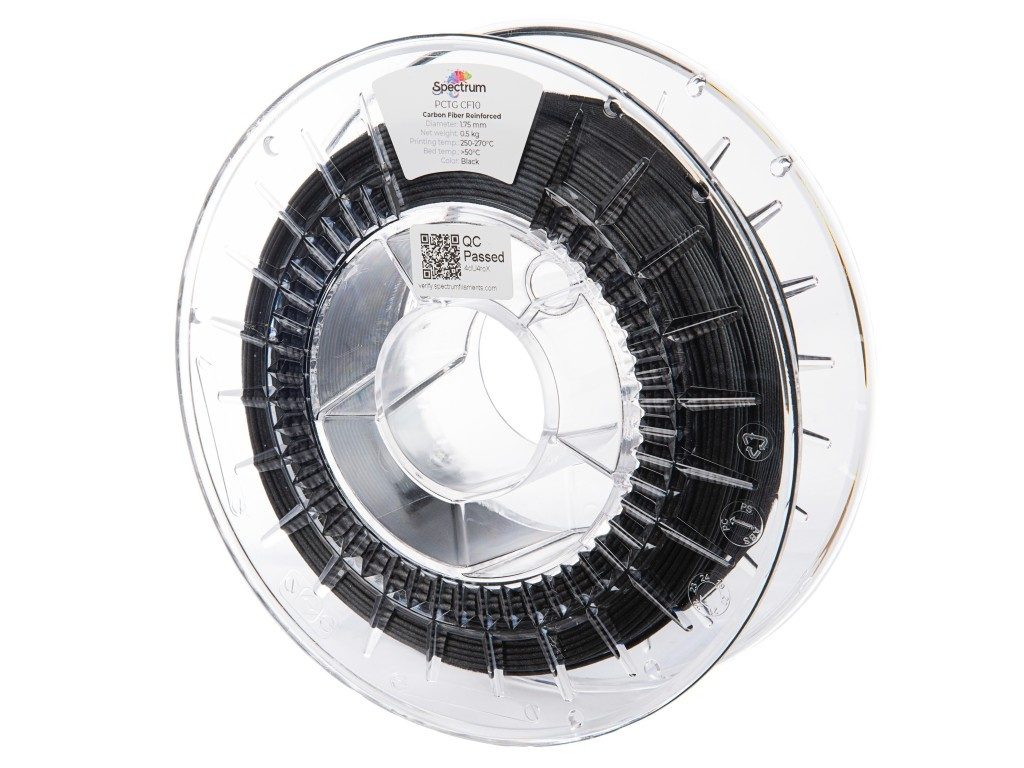
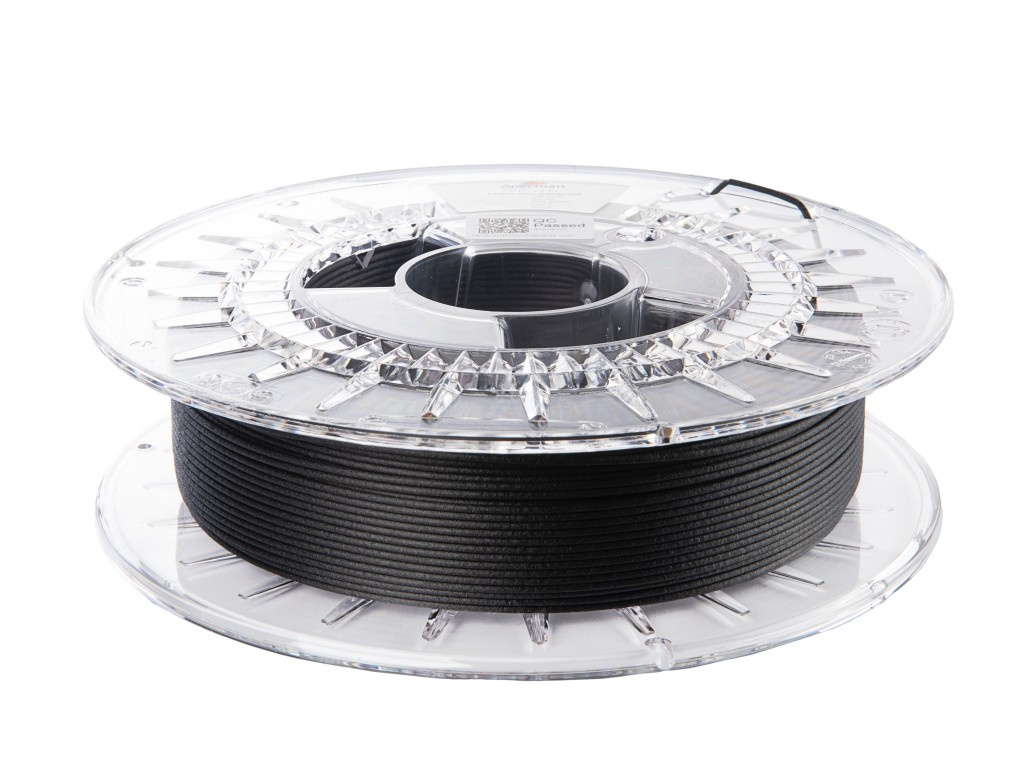
Images are for illustration purposes only.
Parameters
Color:
Black
Packaging:
500 grams
Material type:
PCTG CF10
String diameter:
1.75 mm
Operating temperature:
250 - 270°C
Filament type:
With the coil (full version)
Product description
Outstanding Specialist Enriched with Carbon Fibers
PCTG is a copolyester gaining popularity among users of 3D printing technology.
In terms of properties, it is often contrasted with PETG, which is well known to every printer. It is worth mentioning, however, that PCTG has significantly higher impact toughness compared to its older counterpart. The high flexibility of PCTG combined with high film cohesion, high viscosity, and negligible shrinkage makes it an ideal polymer for composite materials.As the first of the PCTG-based composites, we developed a version with carbon fibers – PCTG CF10.
The carbon fibers used impart extremely high stiffness to the filament while also limiting the brittle fracture that is characteristic of other PETG-based carbon composites. PCTG CF10 filament allows printing parts with increased hardness and tensile strength compared to standard PCTG. The use of carbon fibers increases the thermal resistance of the filament, further reduces shrinkage, and gives the printed models a characteristic "carbon" matte appearance.With Spectrum PCTG CF10 filament, 3D printing becomes an even more viable alternative to traditional plastic processing for obtaining durable and robust everyday objects, regardless of their size.
Material Properties
- 10% carbon fiber content
- thermal resistance HDT B – 78 °C
- Vicat softening temperature – 77 °C
- Good impact resistance
- chemical resistance
- high dimensional accuracy of printed parts
- matte carbon print surface
- Possibility of extrusion
Applications
- visual and functional prototyping
- suitability testing
- conceptual models
- production of housings and covers
- production of parts subject to abrasive wear
- production of tools and fixtures
Recently viewed products


