









- Automotive
- Sanding - Polishing
- One sided adhesive tapes
- Packing tapes
- Coloured - marking tapes
- Electrical tapes
- Office tapes, adhesive tapes
- Slick surface tapes
- Metal adhesive tapes
- Masking crepe tape
- Masking special tapes
- Surface protection tapes
- Foam - sealing tapes
- Anti-slip tapes
- Self-adhesive rubber cut-outs
- Special tapes
- Textile tapes
- Warning and reflective tapes
- Double-sided adhesive tapes
- Electrical insulation material
- Glues
- Materiály pro výrobu technických štítků
- Flexible stoppers, bumpers
- Velcro straps
- Primers - activators - cleaners
- Accessories for adhesives, applicators
 Monitors
 Laptops
 Desktop computers
- Accessories
- Backpacks and laptop bags
- Electronic gadgets
- Ergonomic accessories
- External drives
- Gamepads
- Gaming tables
- Gaming chairs
- Microphones
- Internal drives
- Cables
- Office chairs
- Keyboards
- Mice
- Power supplies
- Memory cards
- Mouse pads
- Markers
- Projectors and accessories
- Mobile phone accessories
- Speakers
- Keyboard and mouse sets
- Headphones
- USB Flash discs
- Gaming steering wheels
- Scales
- Webcams
Paper – how was it created and what is its history?
Paper belongs among the everyday materials that we practically no longer think about at all today. Books, magazines, or even office paper for printers are taken for granted. As if paper had naturally been here since time immemorial. The opposite is true, however. The paper itself was preceded by a number of materials that had only one thing in common. In all of them, people tried to preserve their creations and important information.
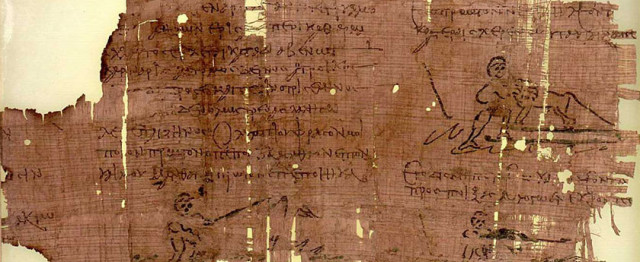
We do not now have in mind only clay or wax tablets. From the perspective of paper’s predecessors, we will be more interested in its more "sophisticated" alternatives. And these are papyrus and parchment. According to the first of them, the name paper is ultimately derived. It is therefore no wonder that we will begin our brief look back into history with papyrus.

Papyrus vs. parchment
Every civilization naturally used the materials that were most readily available in the place where it settled. This naturally concerned both construction materials and other materials as well. While in Mesopotamia people were still writing on the aforementioned clay tablets, several millennia later in ancient Egypt (approximately 3,000–2,500 BC n. l.) papyrus began to be used. The Egyptians took advantage of the potential of the Cyperus papyrus plant, which thrived in the Nile Delta. Papyrus was made by pressing cut thin strips of the plant. Thanks to its properties, it spread throughout the Mediterranean and the Middle East in the following centuries.
For the Greco-Latin world, however, papyrus was not exactly the most ideal material. It was produced in Egypt, supply did not meet demand, and transporting it to Europe also cost something. Thus, the word gradually came into use in the 3rd century AD. l. the invention came from the Asia Minor city of Pergamon. It was a writing material made from the skins of sheep, kids, or calves, which until the 13th the most commonly used writing material of the century. Everything changed only with the arrival of cheaper paper.Parchment was made by soaking and steeping hides in a lime solution, stretching them on wooden frames, and drying them. The surface of the parchment was finally treated with pumice and chalk.

Heracles' papyrus
The history of paper is connected with China
The development of materials mentioned above was a matter of Egypt, the aforementioned Greco-Latin world, and Asia Minor.
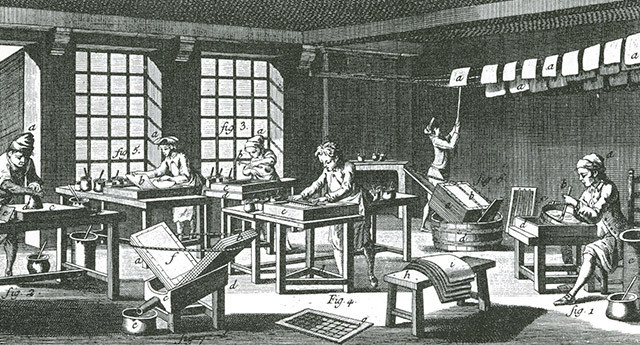
It was different in China. Here, paper began writing history even before the beginning of our era. In the year 105 AD l. paper manufacturing technology was taken to the next level. Paper made from mulberry bark with the addition of flax, jute, or hemp thus resembled today’s office paper in many ways. The exact process of papermaking, much like the recipe itself, was of course kept secret, and it was ultimately the Arab expansion eastward that contributed to its disclosure.At 12. the production of paper then began in Spain and Italy, from where it gradually spread throughout Europe. In 1453, Johann Gutenberg invented printing technology and built the first printing press. This invention was also a very important impetus for paper production itself. Paper mills began springing up like mushrooms after rain as a result of the increased demand for paper. The first paper mill in Bohemia was established as early as the end of the 15th century. century, and the beginnings of handmade paper production in the territory of present-day Slovakia date back to the 16th. century.
The following centuries were then marked by the replacement of manual labor with machines, the expansion of screen width, the growth of labor productivity, and the improvement of technological processes. The result was new types of paper and increasing paper quality.
Interesting facts you probably didn’t know about wood or paper
Wood biomass is the main raw material used in paper production, and producing one ton of paper typically requires 2 to 3 tons of wood. Most often coniferous. Approximately 80,000 sheets of A4 office paper are produced from one tree.
But did you know that woody biomass contains main components such as cellulose, hemicellulose, or lignin, and secondary components so-called extractive substances (e.g. aromatic hydrocarbons, tannins, glycosides, resins, natural dyes, and complex sugars), which are widely used in various sectors of industrial production?
We can mention the cosmetic or pharmaceutical industry, as well as the production of insulation materials, carpets, textiles, and adhesives. From our perspective, extractive substances may also be interesting because, in addition to the aforementioned areas, they are used in printing inks.
What the statistics say
If you are interested in paper consumption statistics, we can provide you with this information as well. Paper consumption per capita in Slovakia is approximately 85 kg. For comparison, in the Czech Republic, paper consumption reaches 130 kg per person, and across the entire European Union, this figure is somewhere around 180 kg. Paper consumption naturally continues to show an upward trend.
TIP: Due to environmental protection, the topic of paper recycling is still relevant. However, you can help the environment not only by collecting paper, but also by handing in empty toner cartridges for environmentally friendly disposal.