









- Automotive
- Sanding - Polishing
- One sided adhesive tapes
- Packing tapes
- Coloured - marking tapes
- Electrical tapes
- Office tapes, adhesive tapes
- Slick surface tapes
- Metal adhesive tapes
- Masking crepe tape
- Masking special tapes
- Surface protection tapes
- Foam - sealing tapes
- Anti-slip tapes
- Self-adhesive rubber cut-outs
- Special tapes
- Textile tapes
- Warning and reflective tapes
- Double-sided adhesive tapes
- Electrical insulation material
- Glues
- Materials for the production of technical labels
- Flexible stoppers, bumpers
- Velcro straps
- Primers - activators - cleaners
- Accessories for adhesives, applicators
 Monitors
 Laptops
 Desktop and gaming computers
- Accessories and Add-ons
- Backpacks and laptop bags
- Electronic gadgets
- Ergonomic accessories
- External drives
- Gamepads
- Gaming tables
- Gaming chairs
- Microphones
- Internal drives
- Cables
- Office chairs
- Keyboards
- Mice
- Power supplies
- Memory cards
- Mouse pads
- Projectors and accessories
- Mobile phone accessories
- Speakers
- Keyboard and mouse sets
- Headphones
- USB Flash discs
- Gaming steering wheels
- Scales
- Webcams
Industrial filaments
Industrial filaments – professional materials for technically demanding 3D printing applications
Industrial filaments represent a category of highly technical 3D printing materials intended for professional and manufacturing use.
These filaments are characterized by high strength, temperature resistance, dimensional stability, and chemical resistance, making them an ideal choice for functional prototypes, structural parts, manufacturing fixtures, and end-use products.Unlike common hobby filaments, industrial materials are developed to withstand mechanical stress, thermal load, and long-term use in demanding environments.
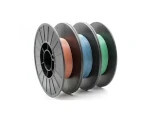


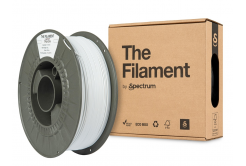
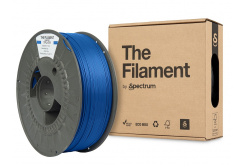
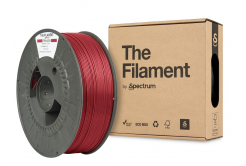

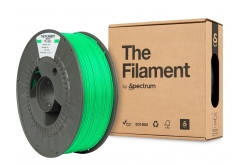
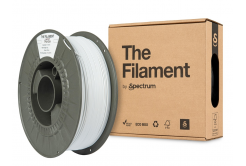
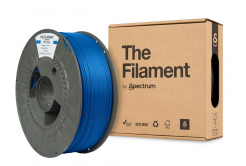
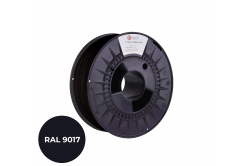
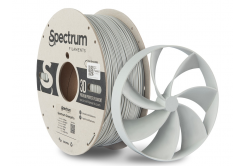
A wide range of materials for industry
The term industrial filaments covers a diverse range of technical plastics that differ in their properties and suitability for use.
Among the most commonly used are:-
PETG – versatile and chemically resistant material with good toughness.
-
ABS – a rigid, temperature-stable plastic suitable for structural parts.
-
ASA – resistant to UV radiation and weather conditions – ideal for outdoor use.
-
Nylon (PA) – an extremely tough, flexible, and abrasion-resistant material.
-
Polycarbonate (PC) – transparent, very strong, and heat-resistant.
-
PBT / PET-CF / PA-CF – carbon fiber-filled filaments to increase stiffness and strength.
-
TPU / TPE – flexible industrial filaments for elastic parts.
Each of these materials is optimized for specific applications – from machine parts and holders, through technical enclosures, fixtures, or spare parts, to production prototypes exposed to heat, chemicals, or UV radiation.
High-performance properties for demanding applications
Industrial filaments provide properties that are essential in a professional manufacturing environment:
-
High temperature resistance (up to 150 °C for some types)
-
Excellent strength, stiffness, and impact resistance
-
Chemical and mechanical stability
-
Low moisture absorption (e.g. for nylons with a carbon fiber additive)
-
Post-processing options – milling, drilling, painting, bonding
-
Compatibility with industrial 3D printers and high-performance extruders
Some industrial filaments are also electrically conductive, antistatic, or self-lubricating, making them suitable for electrical engineering, the automotive industry, and robotics.
Accuracy and stability during printing
Unlike standard PLA materials, technical filaments require more precise temperature control and often also a closed print chamber to ensure a consistent result without warping.
Modern industrial 3D printers (e.g. with a nozzle up to 300–350 °C and a heated bed above 100 °C) allow you to fully utilize the potential of these filaments and achieve mechanically robust parts.
Recommended properties of the printing environment:
-
Closed chamber for temperature control
-
Nozzle 250–350 °C (depending on the filament type)
-
Pad 80–120 °C
-
Drying the material before printing (especially for Nylon and PC)
Industrial filaments for real manufacturing deployment
These materials are not intended only for prototyping – they are increasingly being used for the production of end-use parts, functional components, and assembly aids.
Thanks to their resistance to mechanical stress, oils, solvents, and UV radiation, industrial filaments are capable of replacing traditional injection-molded plastics in many applications.
Typical areas of use:
-
Automotive and aerospace industries
-
Manufacture of tools, fixtures, and templates
-
Electrical engineering and mechanical engineering
-
Healthcare and laboratories (certified types)
-
Production of functional prototypes and small-batch manufacturing
Why choose industrial filaments
-
They withstand high temperatures, pressure, and chemicals
-
They guarantee dimensional accuracy and shape stability
-
They enable the production of fully functional technical parts
-
A wide selection of specialized materials for specific purposes
-
Higher performance than standard PLA filaments, PETG filaments, or ABS filaments
Quality you can rely on
If you are looking for materials for professional and technically demanding 3D printing projects, industrial filaments are the right choice.
It offers mechanical strength, temperature resistance, and precision that meet the requirements of modern industry.Industrial Filaments Category offers a wide range of advanced materials that take 3D printing from the experimental level to full-scale production of functional parts – reliably, precisely, and with a long service life.