









- Automotive
- Sanding - Polishing
- One sided adhesive tapes
- Packing tapes
- Coloured - marking tapes
- Electrical tapes
- Office tapes, adhesive tapes
- Slick surface tapes
- Metal adhesive tapes
- Masking crepe tape
- Masking special tapes
- Surface protection tapes
- Foam - sealing tapes
- Anti-slip tapes
- Self-adhesive rubber cut-outs
- Special tapes
- Textile tapes
- Warning and reflective tapes
- Double-sided adhesive tapes
- Electrical insulation material
- Glues
- Materiály pro výrobu technických štítků
- Flexible stoppers, bumpers
- Velcro straps
- Primers - activators - cleaners
- Accessories for adhesives, applicators
 Monitors
 Laptops
 Desktop computers
- Accessories
- Backpacks and laptop bags
- Electronic gadgets
- Ergonomic accessories
- External drives
- Gamepads
- Gaming tables
- Gaming chairs
- Microphones
- Internal drives
- Cables
- Office chairs
- Keyboards
- Mice
- Power supplies
- Memory cards
- Mouse pads
- Markers
- Projectors and accessories
- Mobile phone accessories
- Speakers
- Keyboard and mouse sets
- Headphones
- USB Flash discs
- Gaming steering wheels
- Scales
- Webcams
Heat shrink tube markers: An essential tool for marking wires and cables
You have surely heard of machines that can print on sleeves and markers, with which you can easily label any cables or wires. These machines are called sleeve printers, or cable sleeve markers. Both names are correct. But how do such sleeve markers or sleeve printers work, and what are their advantages?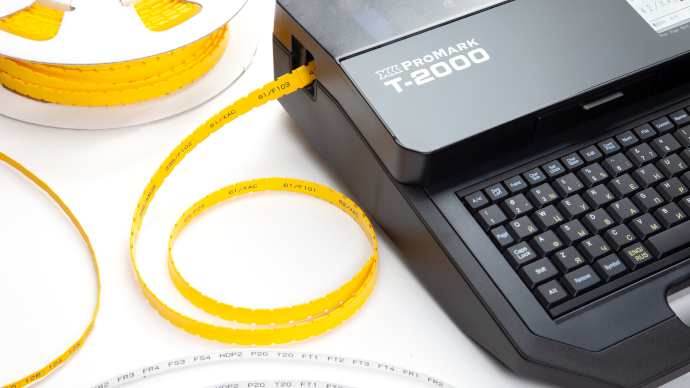
Sleeve markers
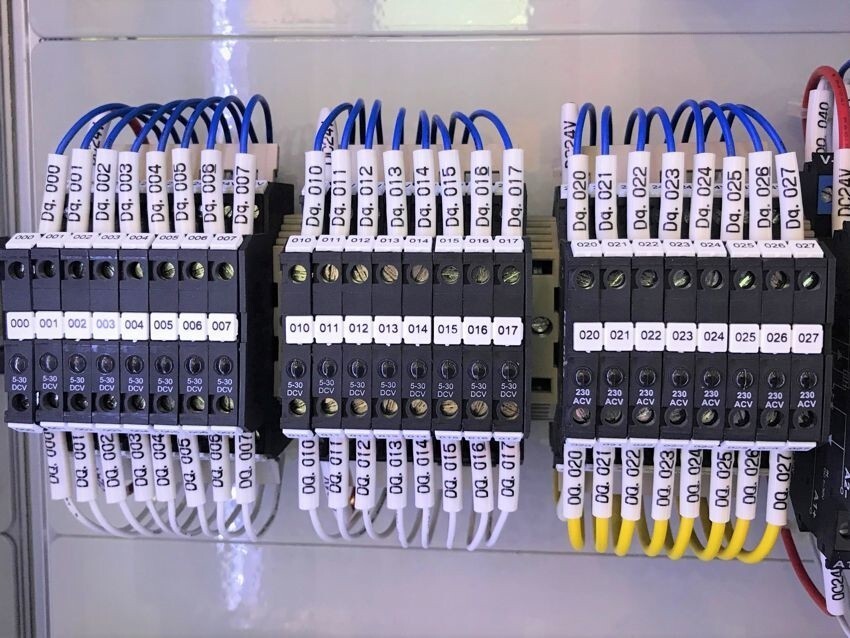
Sleeve markers are most commonly found, for example, in the electrical installation industry (marking conductors in switchboards, industrial installations, and automation), the automotive industry (identification of cable harnesses and components), the telecommunications industry (labeling network and optical cables), as well as in the railway and aerospace industries (precise and durable conductor marking).
How They Work
Heat shrink tube printers most commonly use thermal transfer printing technology.
Thermal transfer printing takes advantage of a ribbon, which is first heated in the printer and then transfers dye onto the surface of heat-shrink tubing or onto the surface of plastic sleeves for heat-shrink tubing.The result is a durable and resistant print that does not smudge and withstands external influences.The printing process takes place in several successive steps:
- Inserting the tubing – Heat-shrink tubing or standard tubing is inserted into the printer
- Setting the parameters – The user sets the text, font size, and optionally barcodes or graphic symbols
- Thermal transfer printing – The print head heats the ribbon (thermal transfer foil) and transfers the color onto the surface of the tubing or sleeve
- Cutting the tubing – Some printers are equipped with an automatic cutter that immediately separates the tubing
- Application to a wire or cable – The heat-shrink tubing is then placed on the cable (for heat-shrink tubing, heating is also used for a firmer attachment)
Less commonly, laser or inkjet printing technology may also be found in tubing markers.
Inkjet printing is, however, the least used for sleeve printers due to the lower durability of the prints.Consumables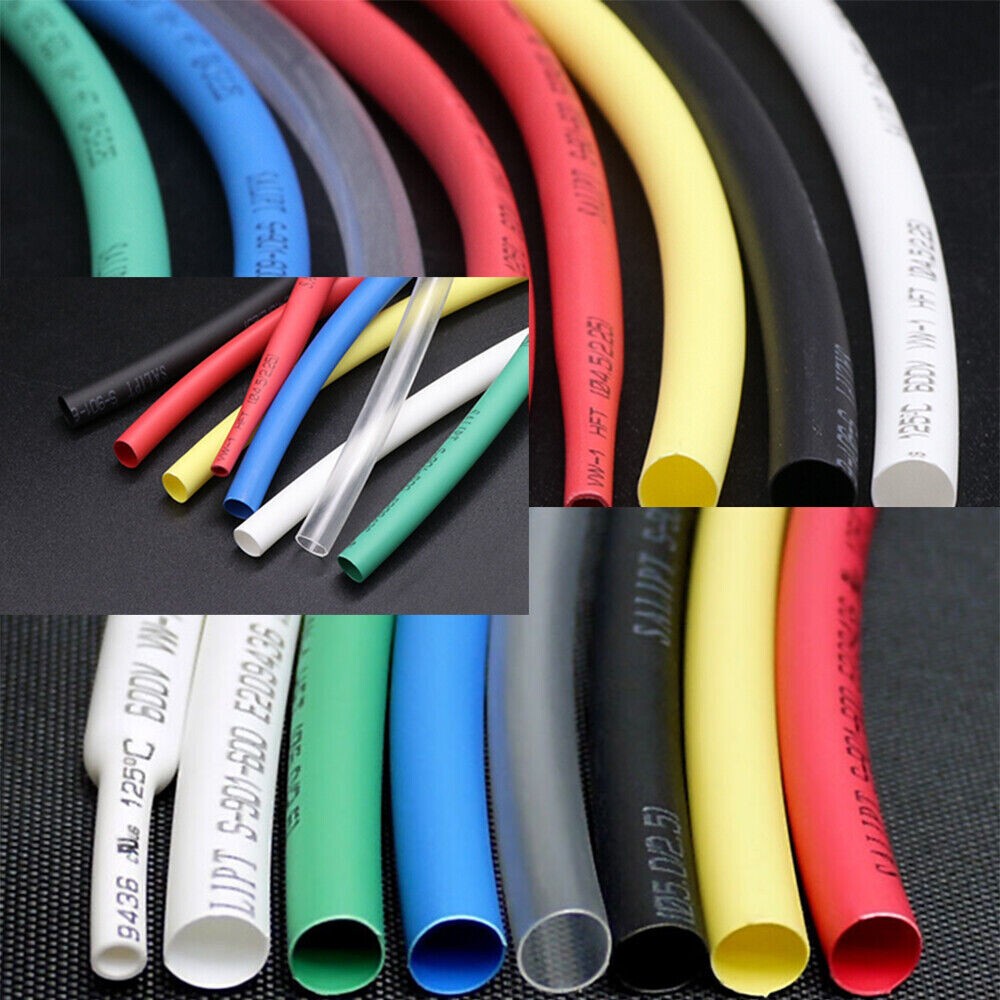
Sleeve printers work with various types of insulating materials, which differ in their durability, flexibility, and suitability for specific applications.
Most commonly used tubing by material:
1. PVC tubing (Polyvinyl chloride)
- An inexpensive option, suitable for less demanding applications
- Resistant to moisture and mechanical damage
2. Heat shrink tubing (Polyolefin, PTFE, FEP, etc.)
- Most commonly used for professional marking
- When heated, they shrink to a smaller diameter and are firmly fixed onto the wire or cable
- Excellent mechanical and chemical resistance, long service life
- Various shrink ratios (2:1, 3:1, 4:1)
3. Halogen-free sleeves
- They do not contain halogens (e.g. chlorine or fluorine), so they do not emit toxic gases when burning
- Most suitable for use in the railway, aerospace, and automotive industries
- They meet strict safety standards
4. Teflon (PTFE) and silicone tubing
- Extreme temperature resistance (-200 °C to +260 °C), resistant to oils, solvents, and acids
- Used in the aerospace industry or healthcare
When choosing, it is important to check compatibility with the printer, especially regarding the diameter, thickness, and surface type of the tubing. However, most sleeve printers can also print self-adhesive tapes, thereby offering users more options for labeling in their field.
Which brands and models of sleeve printers can you find here?
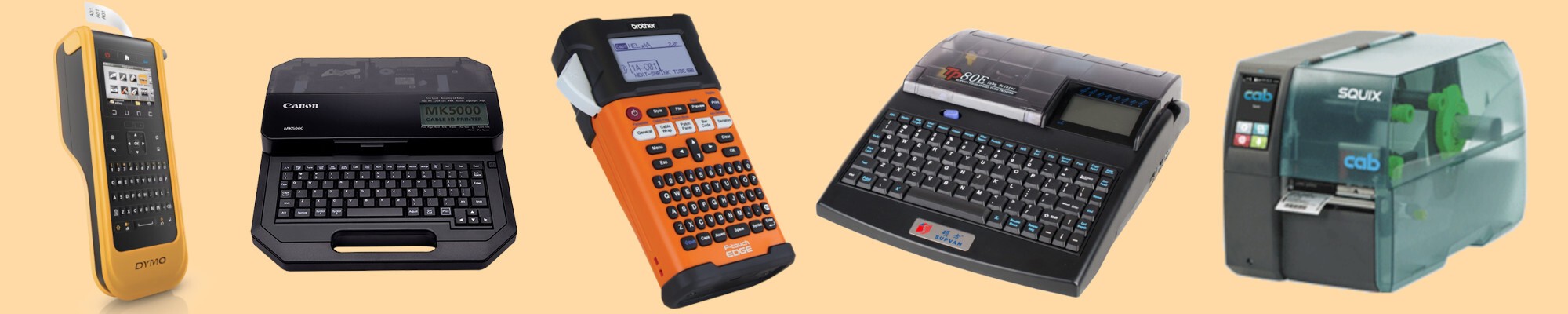
There are several renowned manufacturers of heat shrink tube markers on the market, offering various models ranging from basic handheld printers to fully automated industrial systems.
In our portfolio, you will find tube printers from various manufacturers such as Biovin, Canon, L-Mark, MAX, Partex, PONY, and Supvan, who specialize in the production of professional tube marking printers. Even manufacturers such as Brother, Dymo, Epson, Brady and PONY also offer heat shrink tubing in cartridges that can be used in some of their handheld and desktop label makers.
How to choose the right model exactly for you?
If you are wondering which heat shrink tubing marker you should choose, first ask yourself these important questions:
1. What type of sleeve printer do I need? - Manual? Tabletop? Or directly an industrial one?
2.What materials of sleeves do I need to print on? - PVC sleeves / Heat-shrink tubing (polyolefin) / Halogen-free and special tubing (Recommendation: Make sure the printer supports the correct type and diameter of tubing).
3. What features should the printer have? - Print resolution, print speed, connectivity options, or software compatibility.
4.What are the operating costs? - Printer price, consumables price, long-term availability of materials.
If you are still not sure about choosing the right sleeve printer even after reading this article, do not hesitate to contact us. We will be happy to advise you and recommend the best solution according to your needs.
Sára CDRmarket