









- Automotive
- Sanding - Polishing
- One sided adhesive tapes
- Packing tapes
- Coloured - marking tapes
- Electrical tapes
- Office tapes, adhesive tapes
- Slick surface tapes
- Metal adhesive tapes
- Masking crepe tape
- Masking special tapes
- Surface protection tapes
- Foam - sealing tapes
- Anti-slip tapes
- Self-adhesive rubber cut-outs
- Special tapes
- Textile tapes
- Warning and reflective tapes
- Double-sided adhesive tapes
- Electrical insulation material
- Glues
- Materiály pro výrobu technických štítků
- Flexible stoppers, bumpers
- Velcro straps
- Primers - activators - cleaners
- Accessories for adhesives, applicators
 Monitors
 Laptops
 Desktop computers
- Accessories
- Backpacks and laptop bags
- Electronic gadgets
- Ergonomic accessories
- External drives
- Gamepads
- Gaming tables
- Gaming chairs
- Microphones
- Internal drives
- Cables
- Office chairs
- Keyboards
- Mice
- Power supplies
- Memory cards
- Mouse pads
- Markers
- Projectors and accessories
- Mobile phone accessories
- Speakers
- Keyboard and mouse sets
- Headphones
- USB Flash discs
- Gaming steering wheels
- Scales
- Webcams
Toner yield – the cartridge under the microscope
Toner yield, i.e. the number of A4 pages that can be printed on a printer using a single cartridge, is probably the most important piece of information we pay attention to when purchasing them. Although this parameter can reveal a lot, the reality may ultimately be completely different, and under certain circumstances the number of printed pages may not even come close to the declared figure.
The reasons may be simple. The printed sheets coming out of your printer exceed the standard-defined percentage of page coverage, or the yield is affected by other factors that in practice reduce the actual number of prints.

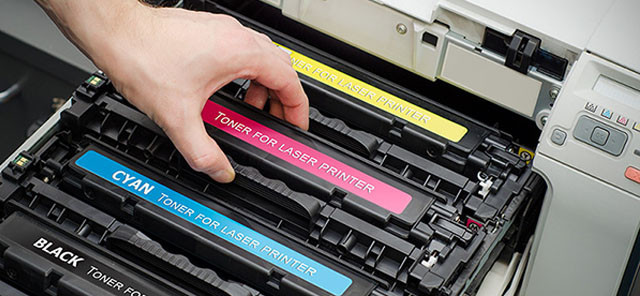
5% page coverage – the general standard for printer manufacturers
Toner yield, as we have already mentioned, can be a decisive factor that is taken into account when choosing a specific printing cartridge. Because in the past individual printer manufacturers did not use the same method to measure yield, comparing toner cartridges with one another was often difficult and complicated for printer users. Therefore, it was necessary to make the market situation clearer, and so printer manufacturers began cooperating with the International Organization for Standardization based in Geneva (you probably know it by the abbreviation ISO).
The result of the mutual cooperation was the approval of new standards for measuring the yield of pages printed by ink cartridges, toners, and also cartridges with monochrome toner. The new ISO standards clearly defined which parameters have a decisive influence on cartridge yield and enabled printer manufacturers to use the same methods when measuring yield. The vast majority of manufacturers have adopted them as their standard. Under the new testing methods for measuring yield, according to the ISO standard, a sheet of paper with 5% coverage and dimensions of 210 x 297 mm, i.e. A4 format, is considered the standard test page.
Yield testing
Yield measurement according to ISO standards is carried out in the form of a test conducted in a controlled environment (in terms of temperature and humidity). Three individual printers are currently used for testing. Each printer uses three cartridges or cartridge sets, and the yield is then stated as the average of the achieved result.
Standards and what reality is
In a controlled monochrome print yield test, a standard test page with 5% coverage is used. In the case of color printing, a combination of five standard test pages with text and graphics is then used. So it is more than certain that the final result may in fact differ diametrically from yield measurements according to ISO standards.
In common practice, it is unlikely that you print only pages with 5% page coverage. If the coverage of the pages you print is therefore significantly higher on average overall, then it is clear that the actual toner yield will decrease in direct proportion as the percentage coverage of the pages increases.
EXAMPLE: If the toner has a stated yield of 6,000 pages at 5% coverage and the average coverage of the pages you print is 10%, you will print only 3,000 pages. At 2O% coverage, that will be 1,500 pages, and as page coverage increases, it will continue further.
The actual toner yield, however, can of course be directly affected not only by printing pages with a higher percentage of coverage or by unsuitable temperature conditions. Among other factors that can significantly affect yield are single-sided or double-sided printing, the type of media, and the type of font used, as well as the unnecessary use of high resolution, which can often increase printing costs without improving the print quality itself.
You can influence yield
There is probably not much you can do about printing pages with a higher coverage percentage, but you can still do something about the other aforementioned factors that have a similar, or even greater, impact on yield. However, this topic deserves special attention, and that is why we have devoted a separate article to it. We will be glad if you read it. We offer you practical advice in it for reducing toner and ink consumption.