









- Automotive
- Sanding - Polishing
- One sided adhesive tapes
- Packing tapes
- Coloured - marking tapes
- Electrical tapes
- Office tapes, adhesive tapes
- Slick surface tapes
- Metal adhesive tapes
- Masking crepe tape
- Masking special tapes
- Surface protection tapes
- Foam - sealing tapes
- Anti-slip tapes
- Self-adhesive rubber cut-outs
- Special tapes
- Textile tapes
- Warning and reflective tapes
- Double-sided adhesive tapes
- Electrical insulation material
- Glues
- Materiály pro výrobu technických štítků
- Flexible stoppers, bumpers
- Velcro straps
- Primers - activators - cleaners
- Accessories for adhesives, applicators
 Monitors
 Laptops
 Desktop computers
- Accessories
- Backpacks and laptop bags
- Electronic gadgets
- Ergonomic accessories
- External drives
- Gamepads
- Gaming tables
- Gaming chairs
- Microphones
- Internal drives
- Cables
- Office chairs
- Keyboards
- Mice
- Power supplies
- Memory cards
- Mouse pads
- Markers
- Projectors and accessories
- Mobile phone accessories
- Speakers
- Keyboard and mouse sets
- Headphones
- USB Flash discs
- Gaming steering wheels
- Scales
- Webcams
News in 3D printing that you shouldn't miss
At the end of last year, HP published a report presenting practical insights and predictions on which trends in 3D printing will influence the manufacturing and business environment over the next 12 months.
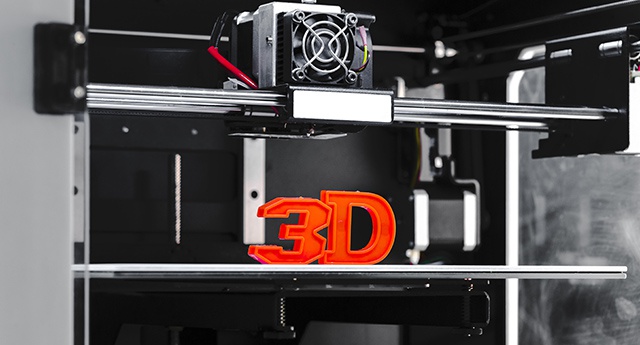
While the 2019 report emphasized the importance of integrating artificial intelligence, or more precisely machine learning, into 3D printing, forecasts for 2020 indicate that the potential of digital manufacturing through 3D printing will grow across several industrial sectors. From our articles, you surely already know well that medical 3D applications are commonly and extensively used in medicine to manufacture surgical aids, functional implants, or prostheses.
We also introduced you to the STRAT automobile from the workshop, or rather the printer, of Local Motors. Of course, we are not mentioning this car merely by chance, because according to HP's predictions in connection with 3D printing, it is precisely the automotive industry that will experience a major boom.
3D printing will support automated assembly and the production of electric vehicles
Welding has traditionally been one of the most automated phases of automobile manufacturing. However, automation is increasing every year, and it is only a matter of time before 3D printers are able to print metal into plastic parts, perform surface finishing, or insert motors into plastic components.
But that's not all. Global trends, together with new expectations and ideas, have dramatically changed almost every aspect of the automotive industry, which has declared its readiness for a fundamental transformation through the production of electric vehicles. And it is precisely in the production of electric vehicles that HP predicts great success for 3D printing. The reason is prosaic.
All companies are increasing electric vehicle production and will continue to increase it in the coming months and years. For example, Volkswagen plans to bring up to 1 million such vehicles to market by 2022. If VW succeeds, it will even surpass California's Tesla and become the leader. But what is decisive from this point of view is that the production of electric vehicles will require enormously large volumes of components, which manufacturers can cover precisely with 3D printing in order to remain competitive.
3D printing has ambitions to increase footwear production
Although we may not always realize it, 3D printing is increasingly becoming part of our lives. Footwear manufacturers have been applying this progressive technology to product design for quite a long time, as well as to the production of certain shoe components.
ADIDAS has a fairly good command of 3D printing technology in the production of some footwear components, but other manufacturers will join them in the near future. Printing complete footwear should no longer be a problem either. The forecasts are therefore more than optimistic; 3D printing technology is reportedly expected to increase footwear manufacturers' revenues worldwide by at least 6 billion dollars over the next decade.
3D printing brings a fresh breeze to dentistry and ophthalmic optics
Digital manufacturing with 3D printing has not bypassed certain medical fields, and ophthalmic optics and dentistry are certainly no exception. Supplementary manufacturing for ophthalmic optics or for digital dentistry with 3D tooth models and invisible aligners is already gaining strong momentum and will only continue to grow in the future. However, the potential of 3D printing and its applications will gradually be fully utilized by regenerative medicine and other medical specialties.