









- One sided adhesive tapes
- Packing tapes
- Coloured - marking tapes
- Electrical tapes
- Office tapes, adhesive tapes
- Slick surface tapes
- Metal adhesive tapes
- Masking crepe tape
- Masking special tapes
- Surface protection tapes
- Foam - sealing tapes
- Anti-slip tapes
- Self-adhesive rubber cut-outs
- Special tapes
- Textile tapes
- Warning and reflective tapes
- Double-sided adhesive tapes
- Electrical insulation material
- Glues
- Flexible stoppers, bumpers
- Velcro straps
- Primers - activators - cleaners
- Accessories for adhesives, applicators
Stars among filaments - Spectrum, C-Tech, Gembird and Verbatim
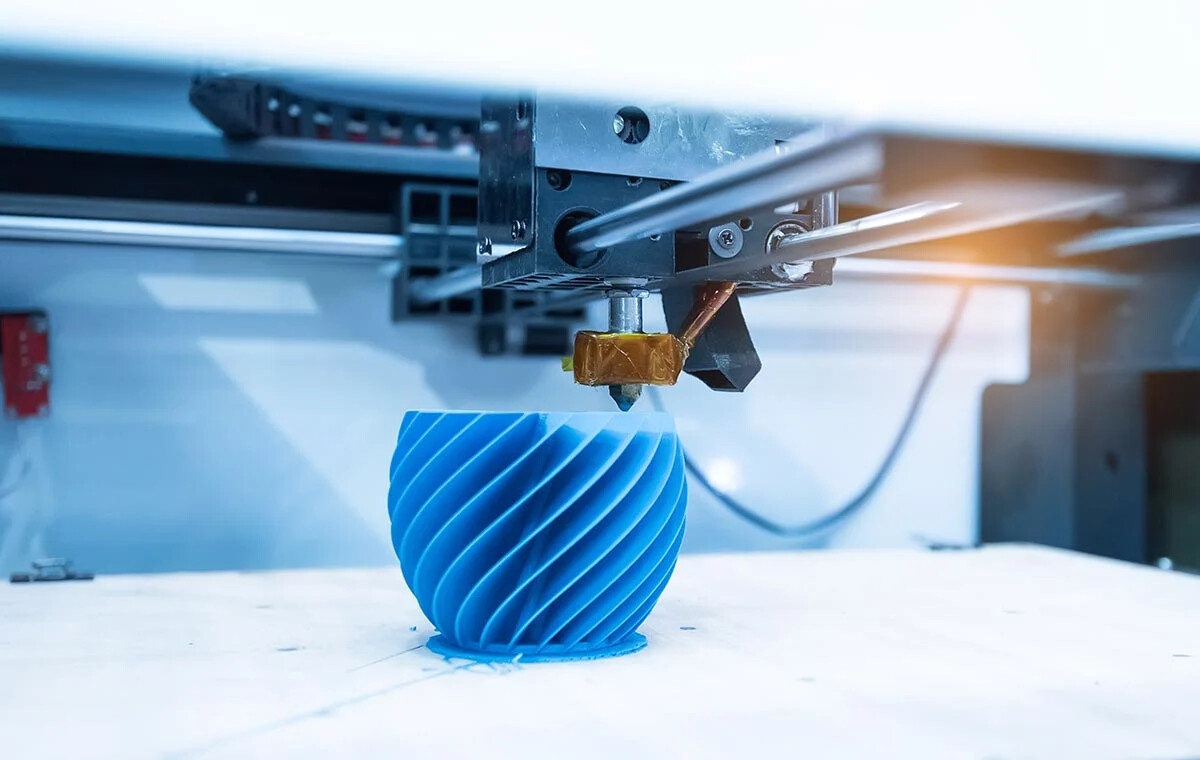
3D filaments and 3D printing in general have become very popular recently. This method of printing is a result of technological progress and is widely used not only in industry, but also in households and schools. To achieve high-quality 3D printing, Spectrum filaments, C-Tech filaments, Gembird filaments, or Verbatim filaments, which you can find here, are a key element.
Why are filaments so popular?
Filaments are becoming an essential part of the 3D printing industry and their popularity continues to grow. They can be made from various materials such as PLA, ABS, PETG and others, which allows them to be used for different purposes, enabling users to create precise and complex models. The color palette of filaments used to include only basic colors, but nowadays filaments can also contain, for example, metallic, glittery, or even natural pigments.
Who can use 3D filaments and for what?
- Industrial manufacturers for producing prototypes, spare parts, and special components
- Schools and universities can use them as teaching aids for engineering and design students
- Designers and artists for creating works of art and innovative designs
- Home users for making toys, practical household tools, and decorations
Types of filaments
-
ABS filament - ABS material is one of the most commonly used types of filament. ABS filament is strong and resistant to both low and high temperatures.It is used, for example, for the production of various parts for mechanical engineering, the printing of packaging for mobile devices, and also LEGO bricks.
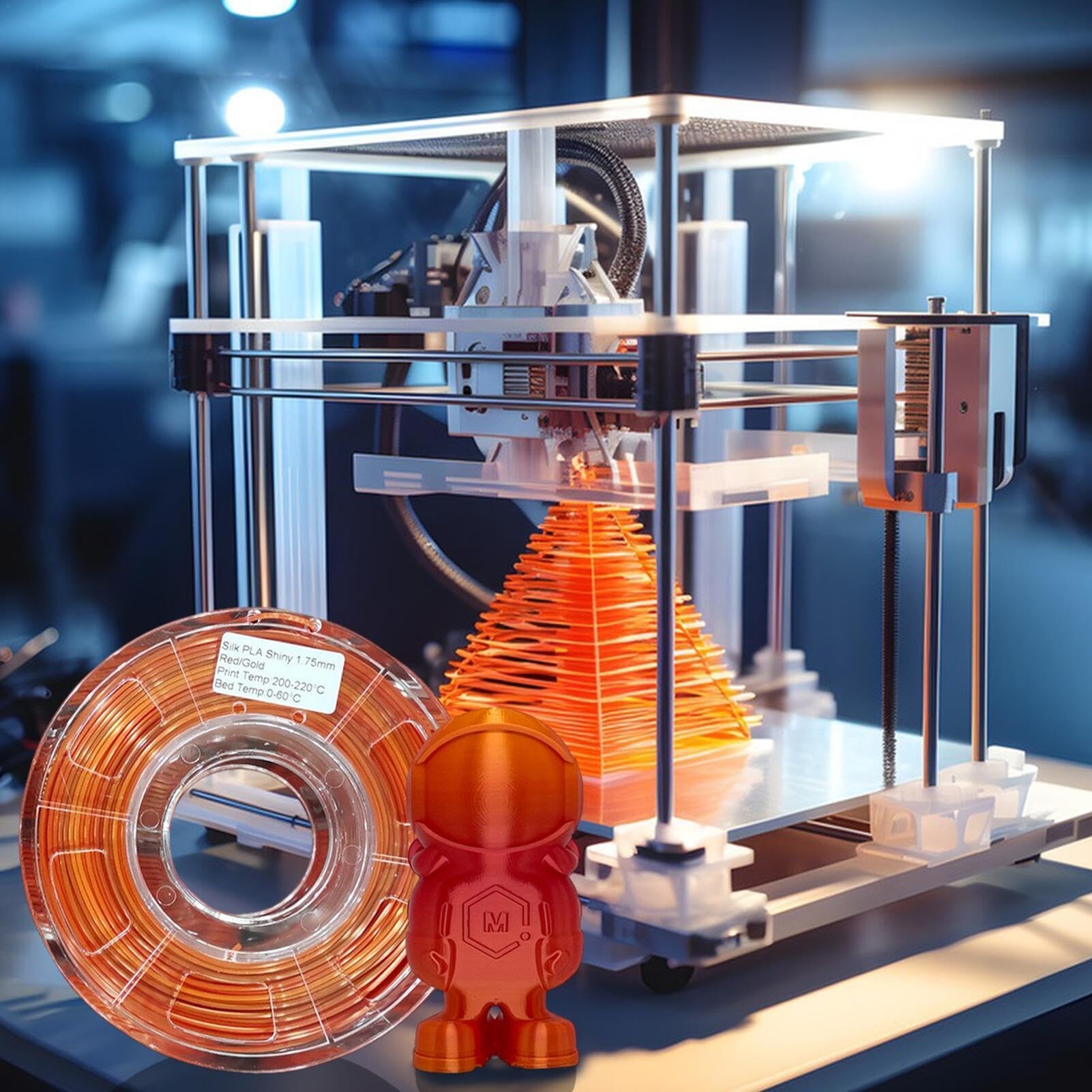
ASA Filament - The ASA filament material is a very high-quality thermoplastic considered to be the successor to ABS filament. Prints made from ASA filament are resistant to sunlight, have excellent mechanical resistance, stiffness, and heat resistance, making them suitable especially for outdoor use. ASA filament can be used for 3D printing gardening aids, tools for sports activities, or garden decorations.
-
Filament FLEX - The name "Filament FLEX" itself suggests that the material of these printing filaments is flexible.They are made of thermoplastic elastomers, soft rubber materials, and other additives. The advantage of these additives is that they make printed products highly resistant to heavy loads.FLEX filament is suitable for 3D printing objects that may be subject to impacts, such as mobile device cases, tires for remote-controlled cars, or various decorations.
-
PCTG Filament - The PCTG filament material excels in resistance to high temperatures up to 76 °C, chemicals, and also offers greater transparency. Its greatest pride, however, is its high impact resistance (resistance to impact in bending, torsion, or tension), so the resulting products made from this material will retain their shape even under pressure. You can use PCTG filament in the food industry, healthcare, as well as, for example, in industry and robotics.
-
PETG Filament - PETG filament is an improved version of PET material, enhanced by the addition of modified glycol, which creates a less brittle printing filament with even easier usability and impact resistance. PETG filament belongs among the popular types of filaments for 3D printing. Its temperature resistance reaches up to 70°C, it is more resistant to chemicals and UV radiation, and it is easily recyclable.
-
PLA Filament - PLA filament is the most popular printing filament for 3D printing. The material of these filaments is a thermoplastic polymer made from renewable resources (corn or potato starch, sugar cane, etc.), so it is also the most biodegradable.Additionally, during 3D printing, this filament does not smell at all, and no heated bed is required to print with it.
-
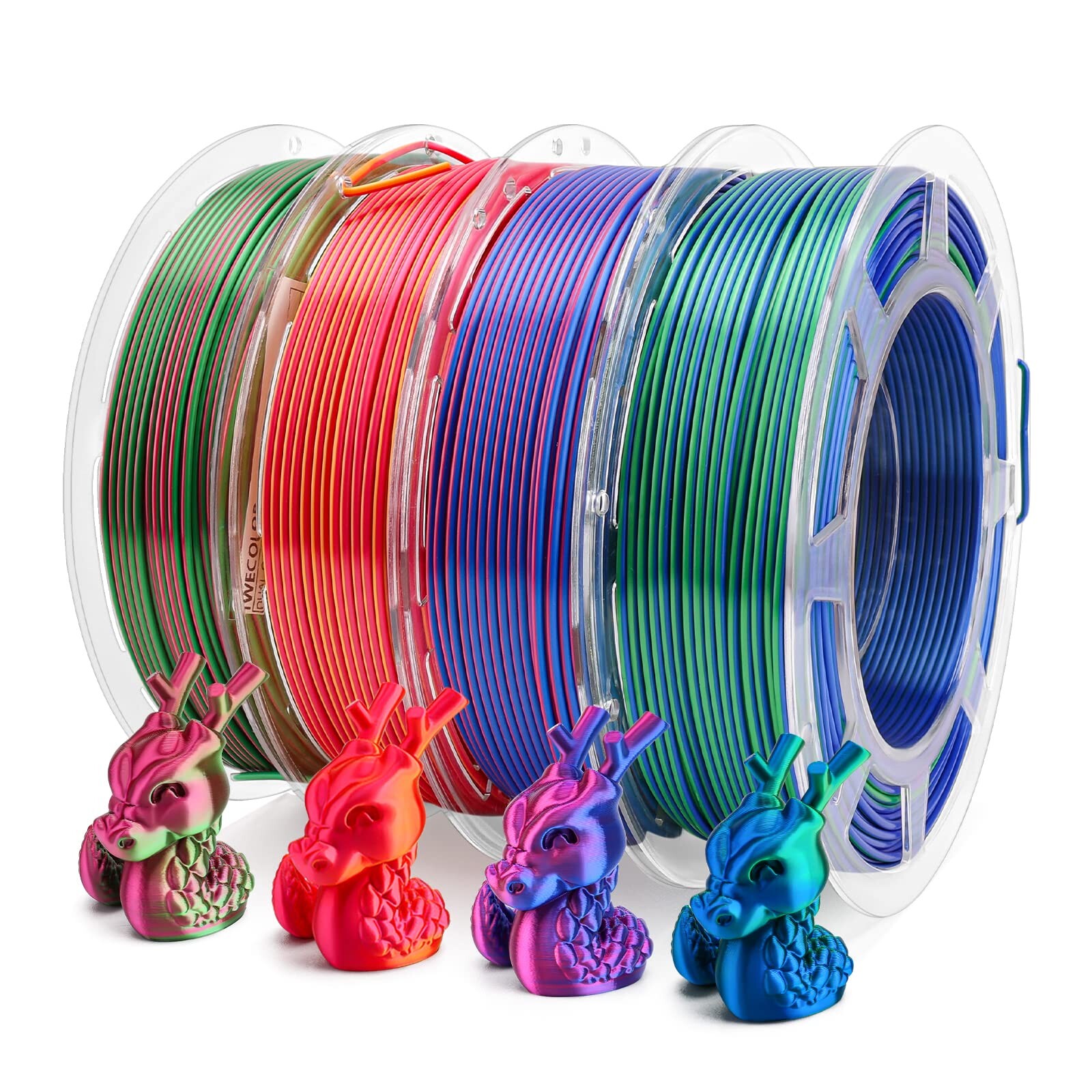
PLA Silk Filament - PLA Silk filament is a combination of PLA material and interesting color pigments.The composition of PLA Silk filament is absolutely identical to classic PLA filament - it is also made from renewable resources, has a lower printing temperature, is odorless, and does not require a heated bed. The most common use of this silk-gloss filament is certainly rather in decorations that no one will simply overlook.
Industrial filaments - Industrial filaments may have various designations (e.g.PC 275, PA6, PMMA, TPE) by material type.However, all industrial filament materials share common purposes: to withstand as many adverse conditions as possible and to meet the requirements for printing the most demanding projects.
-
WOOD filaments - Wood filament is usually a combination of PLA or ABS material and particles of recycled wood. The product will thus have the appearance and even the scent of real wood. The composition of PLA wood filament is absolutely identical to classic PLA filament - it is also made from renewable resources.Thanks to the admixture of real wood, the resulting prints can also be varnished or worked.
ASA, PETG, and PLA filaments may also differ in their names depending on whether their materials contain any special additives or not. For example, PLA filaments may contain special pigments (matte, glow-in-the-dark, glittery, metallic, etc.).
All these types of 3D printing filaments from manufacturers Spectrum, C-Tech, Gembird, and Verbatim can be found on our website, and we even have most of them in stock, so you won’t have to wait long for your products and can start printing as quickly as possible.
Sára CDRmarket