









- One sided adhesive tapes
- Packing tapes
- Coloured - marking tapes
- Electrical tapes
- Office tapes, adhesive tapes
- Slick surface tapes
- Metal adhesive tapes
- Masking crepe tape
- Masking special tapes
- Surface protection tapes
- Foam - sealing tapes
- Anti-slip tapes
- Self-adhesive rubber cut-outs
- Special tapes
- Textile tapes
- Warning and reflective tapes
- Double-sided adhesive tapes
- Electrical insulation material
- Glues
- Flexible stoppers, bumpers
- Velcro straps
- Primers - activators - cleaners
- Accessories for adhesives, applicators
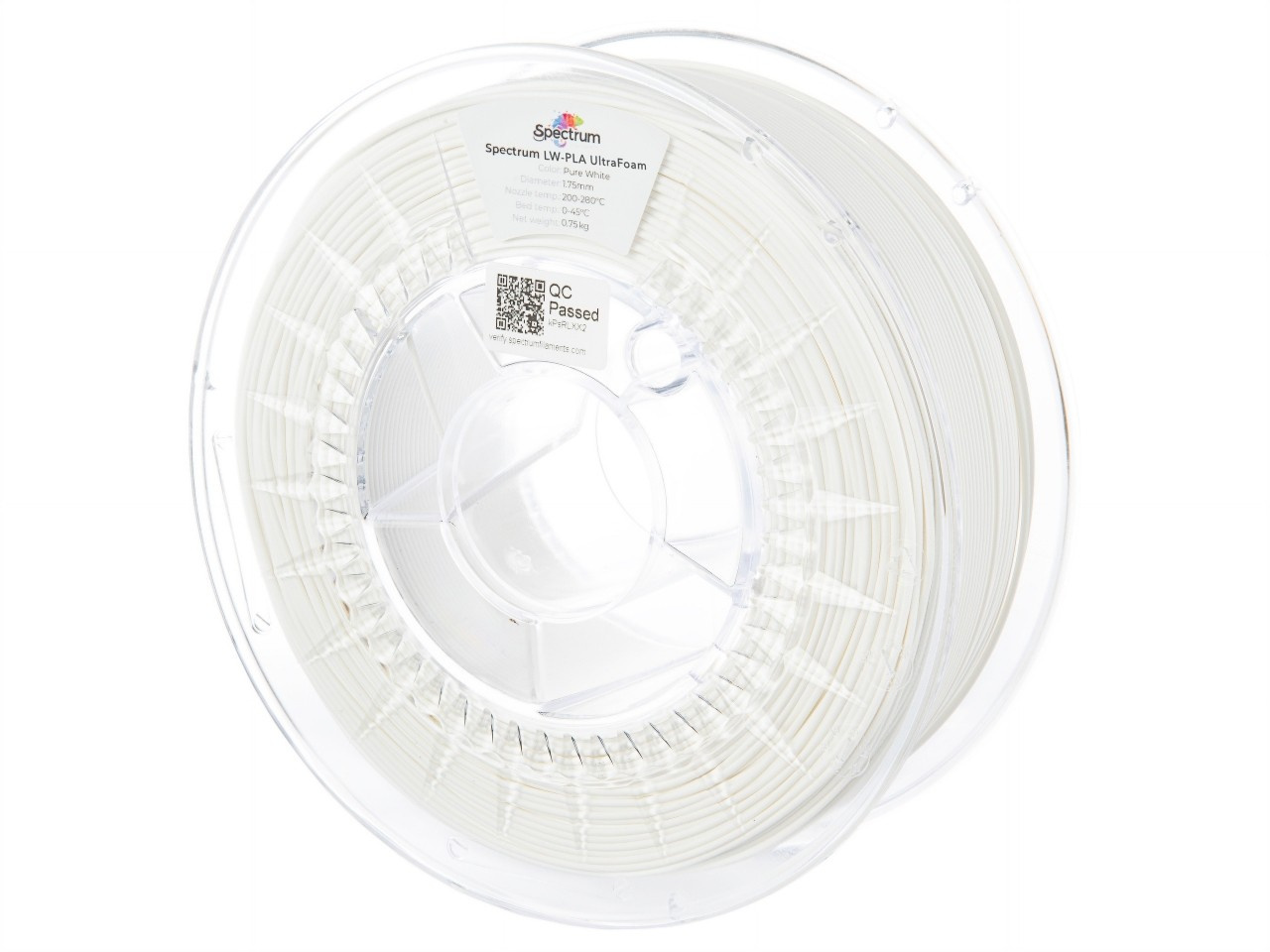
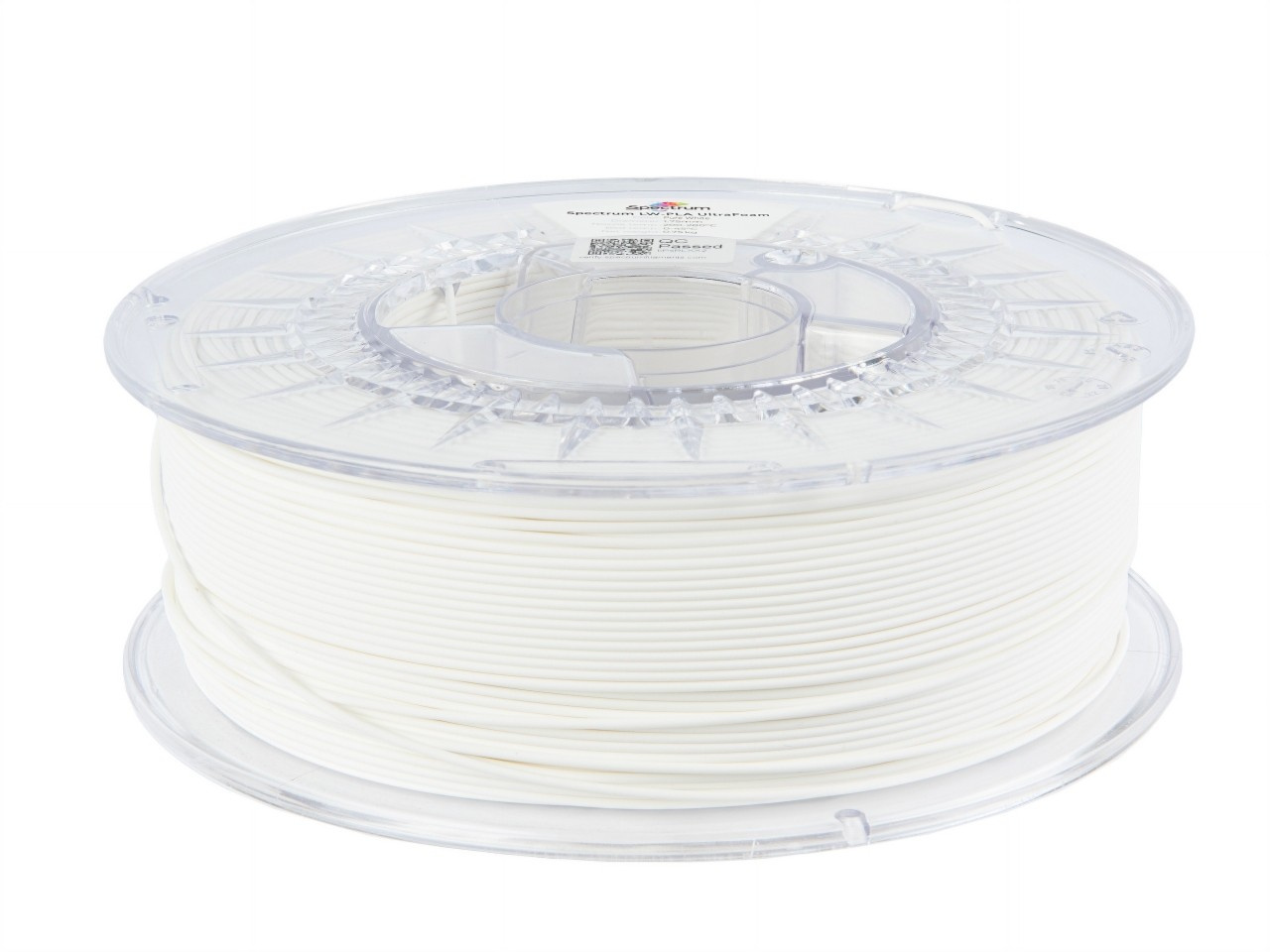
Spectrum 81006 3D filament, LW-PLA UltraFoam, 1,75mm, 750g, Pure white
Parameters
Product description
Spectrum filament LW-PLA UltraFoam is an innovative filament that combines the properties of high-quality PLA with advanced active foaming technology. Thanks to its unique material characteristics, it allows for more than a 3× reduction in weight of printed parts without losing strength or surface quality. Spectrum filament LW-PLA UltraFoam is the ideal solution for those seeking lightweight, durable, and aesthetically impressive prints – especially where every gram matters, such as in modeling, drone construction, or prototyping.
The filament is based on the proven Spectrum Premium PLA and is enriched with additives that allow controlled volumetric expansion during printing. The foaming process is activated at approximately 220 °C, reaching its maximum effect in the range of 240–250 °C. When printing below 220 °C, the material behaves like standard Premium PLA, offering high flexibility in choosing printing parameters.
In the full foaming phase, the filament expands more than 3×, achieving an extremely low density of around 0.40 g/cm³.
Spectrum filaments LW-PLA UltraFoam offer significant variability in flow regulation – allowing it to be reduced by up to 70%. The level and speed of foaming can be controlled by temperature, allowing the density to be adjusted for specific parts of the model. Foaming additionally enables faster 3D printing, for example by using higher layers or printing single-shell boundaries. By using LW-PLA UltraFoam, it is possible to achieve parts that weigh only about 30% of the weight of prints made from standard PLA – more than 3× lighter, yet still strong and visually high-quality.The matte finish of the print effectively conceals the layers, giving the printed parts a professional appearance.
The level of foaming also affects the shade - with higher expansion, the color can be noticeably lighter. In addition, the filament retains all the key properties of classic PLA – easy printing and high dimensional stability. Spectrum filament LW-PLA UltraFoam is the ideal solution for applications where weight matters, such as RC modeling, drone construction, or lightweight functional components.Material Properties
- More than 3× weight reduction of printed parts
- Active foaming technology – activation at 220–250 °C
- Adjustable material density – full control over flow and part structure
- Very low resulting density – up to approximately 0.40 g/cm³
- More than 3× higher yield – one spool of LW-PLA UltraFoam lasts as long as three spools of standard PLA
- Matte surface effectively conceals layers
How to Use
Nozzle Temperature [°C]: 190–250 °C
Bed Temperature [°C]: 0–50 °C
Recommended Print Speed [mm/s]: 15–50 mm/s
Cooling: 0–100%
Enclosure: not necessary
Recommended to dry: Yes
Ruby / hardened nozzle: Not necessary
Adhesion: recommended (Dimafix, 3DLac, Magigoo)
