









- Automotive
- Sanding - Polishing
- One sided adhesive tapes
- Packing tapes
- Coloured - marking tapes
- Electrical tapes
- Office tapes, adhesive tapes
- Slick surface tapes
- Metal adhesive tapes
- Masking crepe tape
- Masking special tapes
- Surface protection tapes
- Foam - sealing tapes
- Anti-slip tapes
- Self-adhesive rubber cut-outs
- Special tapes
- Textile tapes
- Warning and reflective tapes
- Double-sided adhesive tapes
- Electrical insulation material
- Glues
- Materiály pro výrobu technických štítků
- Flexible stoppers, bumpers
- Velcro straps
- Primers - activators - cleaners
- Accessories for adhesives, applicators
 Monitors
 Laptops
 Desktop computers
- Accessories
- Backpacks and laptop bags
- Electronic gadgets
- Ergonomic accessories
- External drives
- Gamepads
- Gaming tables
- Gaming chairs
- Microphones
- Internal drives
- Cables
- Office chairs
- Keyboards
- Mice
- Power supplies
- Memory cards
- Mouse pads
- Projectors and accessories
- Mobile phone accessories
- Speakers
- Keyboard and mouse sets
- Headphones
- USB Flash discs
- Gaming steering wheels
- Scales
- Webcams
How to take the first step toward a paperless office?
Do you also feel that papers are piling up in the company faster than you can sort them? Invoices in binders, contracts in drawers, delivery notes on the desk, and important documents that no one can find right when you need them? That is precisely why more and more companies are switching to a paperless office. Document digitization today is neither complicated nor expensive and can save a surprising amount of time and space.
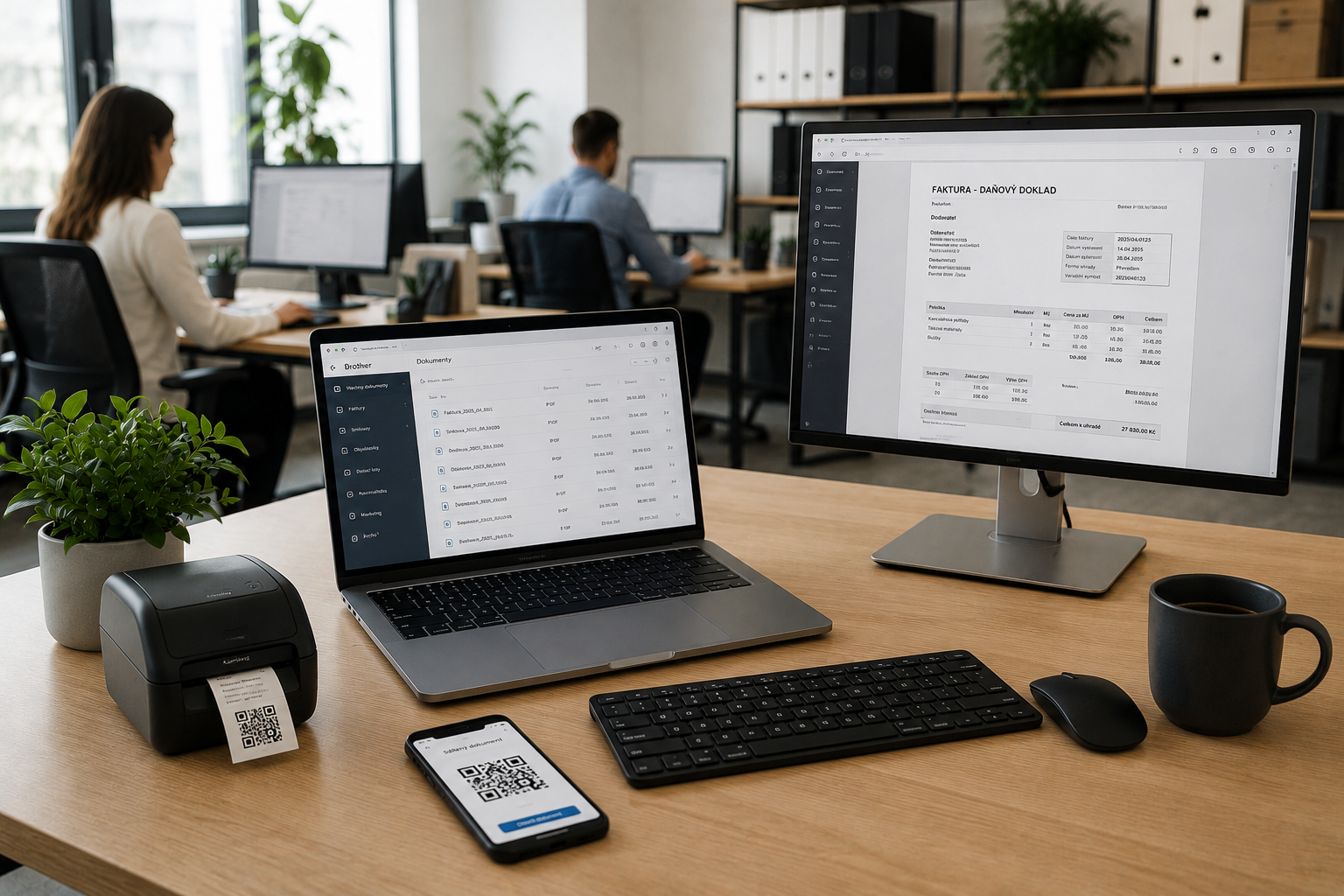
What all no longer needs to be handled on paper today?
Many companies imagine only invoice scanning under the term paperless office. In fact, many more processes can be digitized than might seem at first glance.
- Invoices and contracts – an electronic archive is clearer than shelves full of binders
- Delivery notes and orders – easy storage and quick retrieval
- Handover protocols – signatures directly on a tablet or phone
- Instructions and internal procedures – a QR code is enough instead of printed folders
- Asset records – computers, printers, or tools can be labeled with a tag
- Document archiving – less paper and more space in the office
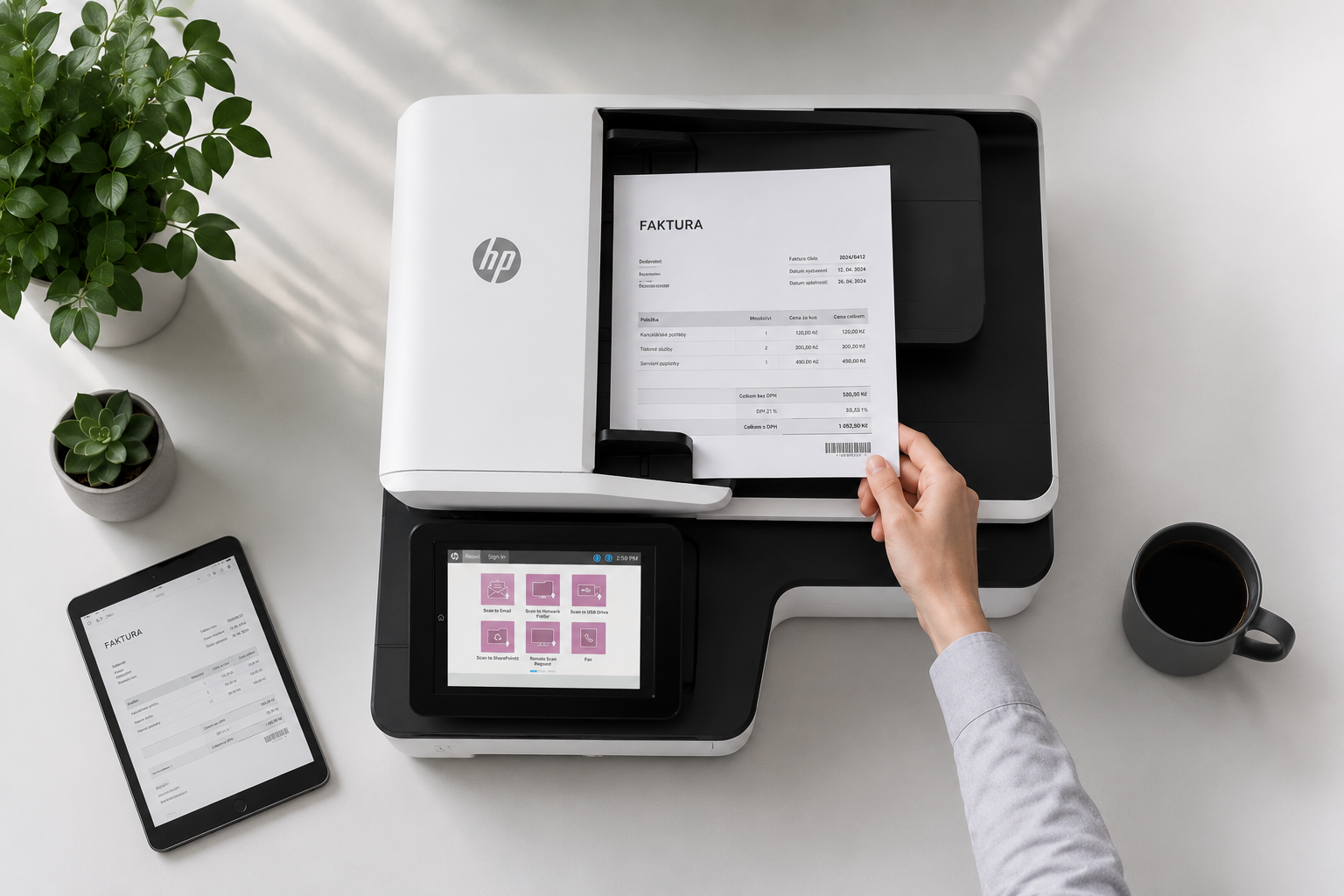
A paperless office starts with documents
The first step is to convert paper documents into electronic form.
Invoices, contracts, orders, quotations or HR documentation can be scanned within a few seconds using a document scanner and safely stored on a computer or in a company system.Thanks to the digitization of documents, the lengthy searching through archives is eliminated, and the necessary information is available to you practically immediately. Modern document scanners can also handle duplex scanning, automatic document feeding, and fast archiving of larger quantities of paper.
One QR code can replace an entire binder
Does that sound exaggerated? In fact, it is enough to stick a QR code on a binder, box or shelf, and after scanning it, the employee will be taken directly to the documents stored in the system.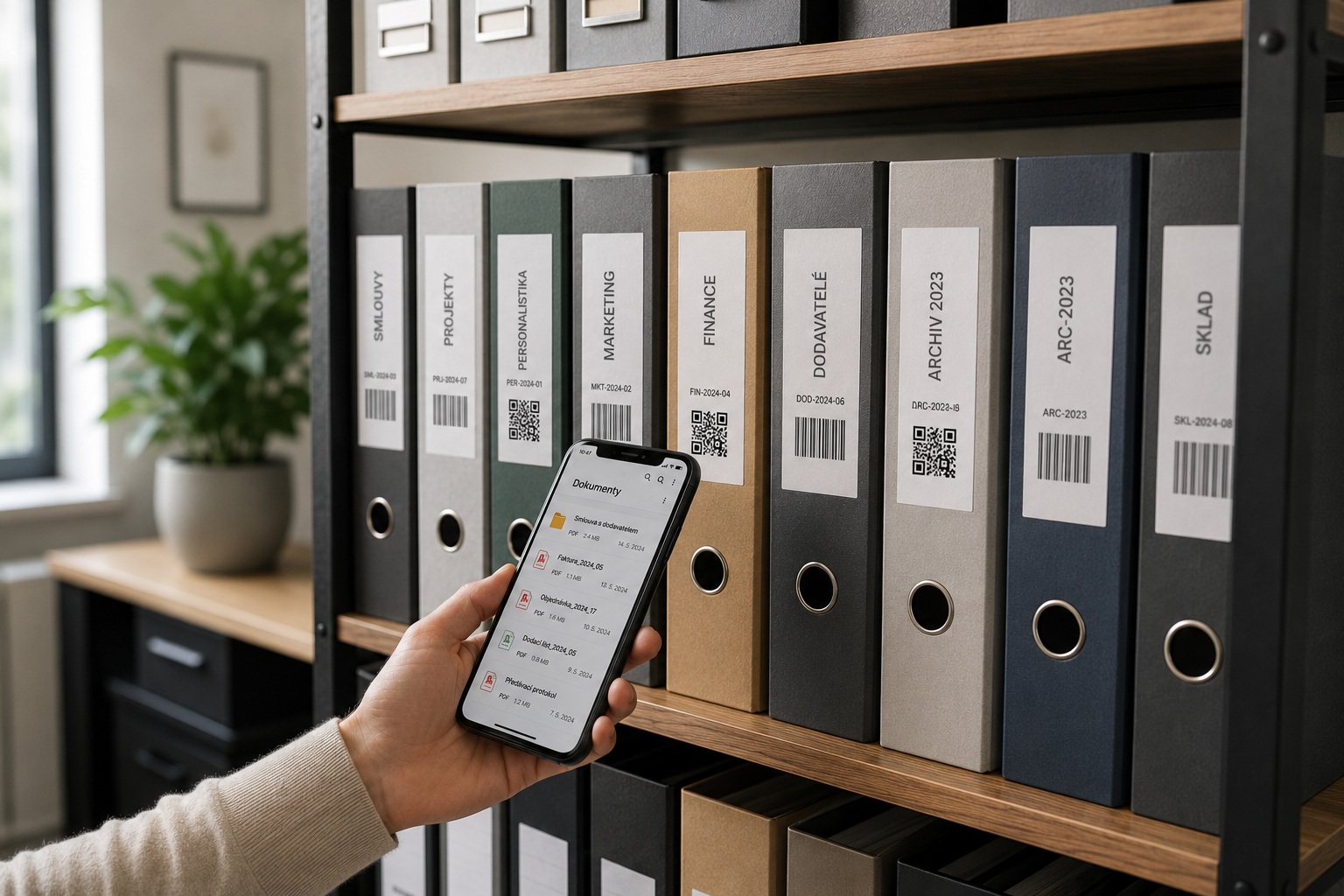
- device manuals
- service documentation
- warranty certificates
- safety instructions
- photo documentation
- internal company documents
Instead of searching for papers, it is enough to take out your phone, and within a few seconds you have everything at hand. It is precisely similar simple solutions that often bring the greatest time savings.
Order that saves time
Paperless office is not just about scanning. The organization of documents, folders, archives, and storage spaces is also important.
Many companies therefore use label printers, which enable fast and professional labeling:
- binders and archive boxes
- shelves and storage locations
- company assets
- equipment and accessories
- drawers and storage spaces
A simple label often saves more time than most people realize.
When you need to find a document within seconds
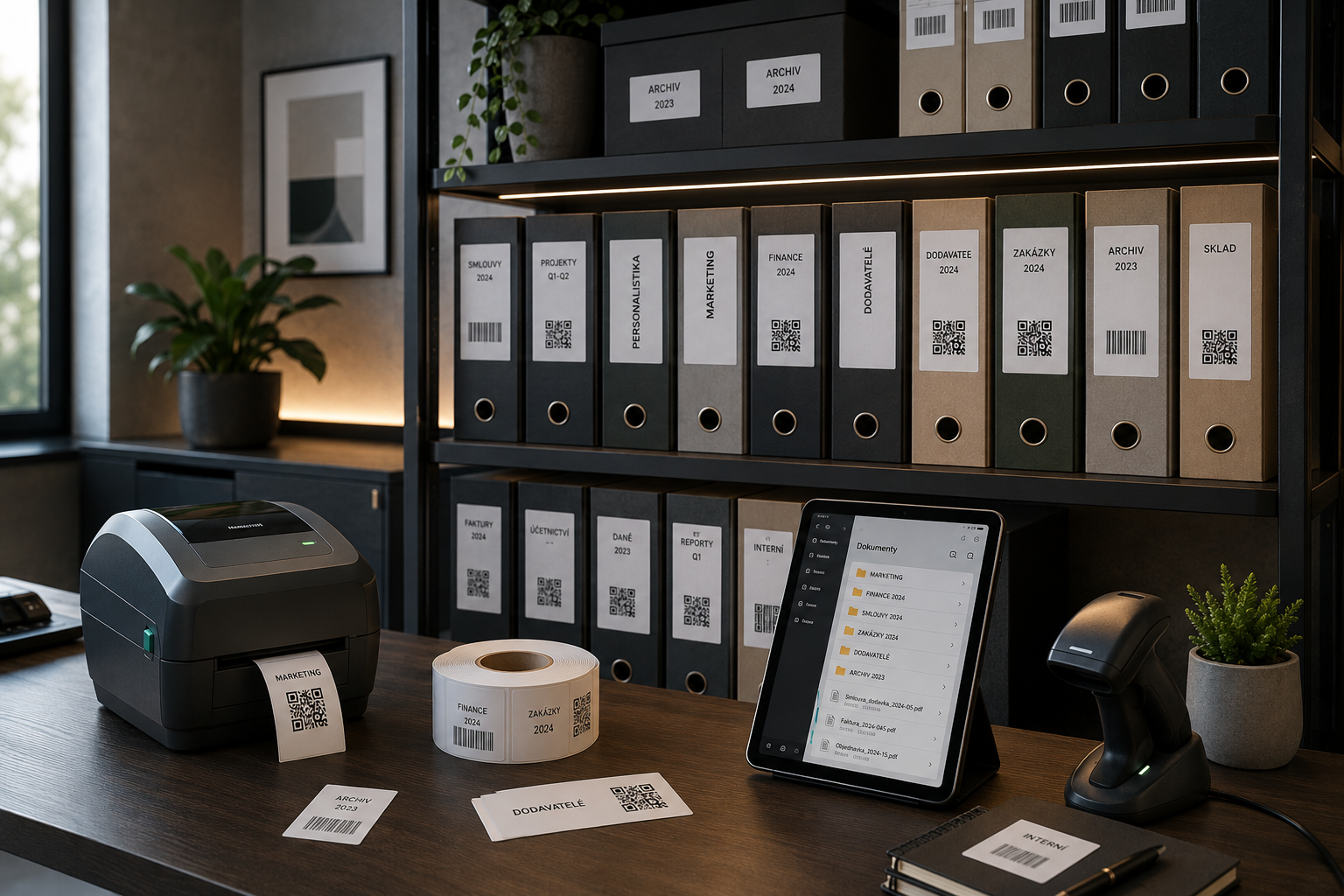
Companies are increasingly using QR codes and barcodes. Documents, assets or inventory can be easily recorded and subsequently retrieved within a few
moments. In combination with barcode scanners, you get a fast and efficient record-keeping system without lengthy manual data entry.
This solution is used not only in warehouses and logistics, but also in offices, accounting departments, archives, or manufacturing companies.
Small change, big difference
Transitioning to a paperless office doesn’t have to happen in a single day. Many companies start gradually:
- digitizing new documents
- implementing electronic archiving
- labeling documents and assets with labels
- using QR codes and barcodes
- reducing unnecessary printing
If you want to gain greater control over documents, inventory, and company administration, self-adhesive labels can also help, as they find use in almost every office and warehouse.
Paperless office is not just a modern trend. It is a practical way to simplify everyday work, speed up document retrieval, and get rid of unnecessary paper chaos. The sooner you start, the sooner you will feel the difference.
Bára from CDRmarket