









- Automotive
- Sanding - Polishing
- One sided adhesive tapes
- Packing tapes
- Coloured - marking tapes
- Electrical tapes
- Office tapes, adhesive tapes
- Slick surface tapes
- Metal adhesive tapes
- Masking crepe tape
- Masking special tapes
- Surface protection tapes
- Foam - sealing tapes
- Anti-slip tapes
- Self-adhesive rubber cut-outs
- Special tapes
- Textile tapes
- Warning and reflective tapes
- Double-sided adhesive tapes
- Electrical insulation material
- Glues
- Materials for the production of technical labels
- Flexible stoppers, bumpers
- Velcro straps
- Primers - activators - cleaners
- Accessories for adhesives, applicators
 Monitors
 Laptops
 Desktop and gaming computers
- Accessories and Add-ons
- Backpacks and laptop bags
- Electronic gadgets
- Ergonomic accessories
- External drives
- Gamepads
- Gaming tables
- Gaming chairs
- Microphones
- Internal drives
- Cables
- Office chairs
- Keyboards
- Mice
- Power supplies
- Memory cards
- Mouse pads
- Projectors and accessories
- Mobile phone accessories
- Speakers
- Keyboard and mouse sets
- Headphones
- USB Flash discs
- Gaming steering wheels
- Scales
- Webcams
How to choose the right TTR ribbon for your labels?
Have you purchased a label printer with TTR printing and don’t know which ribbon to choose? Find out how to choose the right type of TTR ribbon according to the label material, width, winding direction, and core size, and achieve high-quality, durable printing.
What to Focus on When Choosing the Right TTR Thermal Transfer Ribbon
TTR Ribbon Material
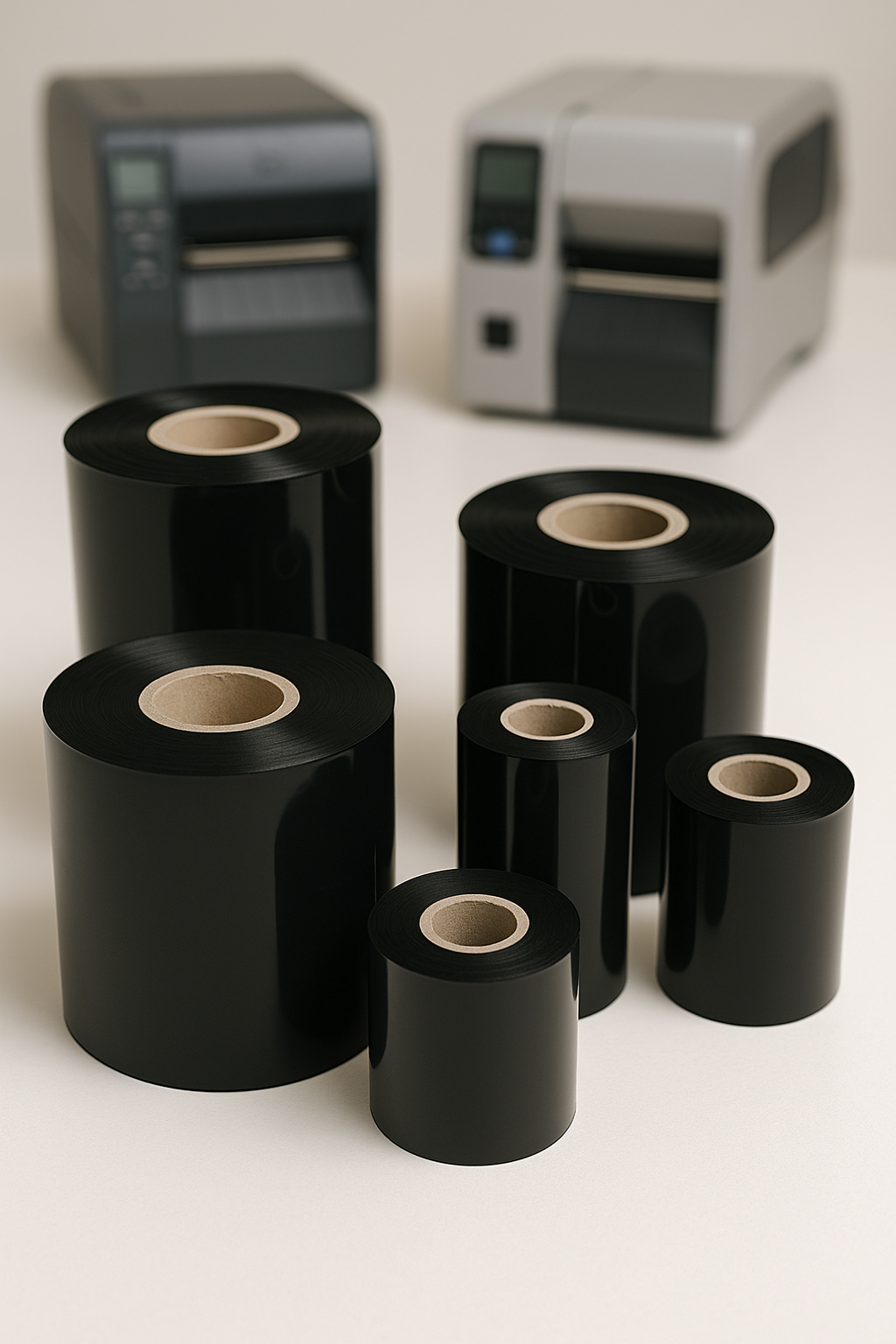
The right choice of TTR ribbon depends, among other things, on what label material you are printing on and the environment in which the labels will be used.
Wax TTR Ribbons
Wax TTR ribbons are ideal for matte paper labels, which you can use, for example, in warehouses, logistics, or retail.
-
Advantages: Low price, good readability, and easy printing
-
Disadvantages: Lower resistance to moisture, abrasion, and chemicals
If the self-adhesive label will not be exposed to demanding conditions, wax TTR ribbon will be fully sufficient.
Wax-resin TTR ribbons
Combines the advantages of both worlds – wax and resin.
Suitable for glossy paper and plastic labels (PE = Polyethylene, PP = Polypropylene), where greater durability is required.-
Advantages: More resistant to abrasion and moisture, sharp printing
-
Suitable for: Food, cosmetics, logistics labels
It is the most common and most versatile choice, offering a good price-to-quality ratio.
Resin TTR Ribbons
This type of TTR ribbon is intended for synthetic self-adhesive labels, such as polyester (PE) or polyimide (Kapton) labels, which must withstand extreme temperatures, chemicals, and UV radiation.
-
Advantages: high resistance to chemicals, UV radiation, and heat
- Use: industrial marking, electronics, laboratories, printing on plastic tubing
Resin TTR ribbons provide the most durable print, but require a higher printing temperature and a high-quality printhead.
TIP FROM US: To verify the correct selection, you can also use the TTR RIBBON FINDER.
TTR Ribbon Width
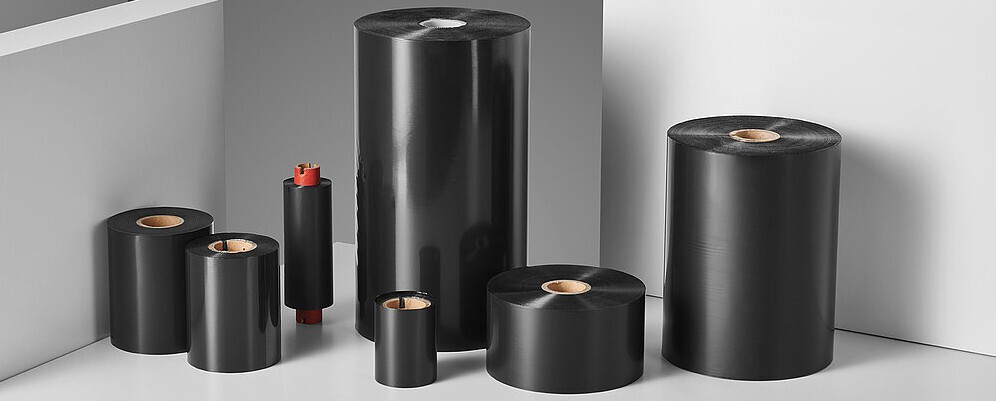
The TTR ribbon should be at least 2 mm wider than the label on each side.
E.g. self-adhesive label is 100 mm → TTR ribbon should be min. 104 mm.TTR film winding
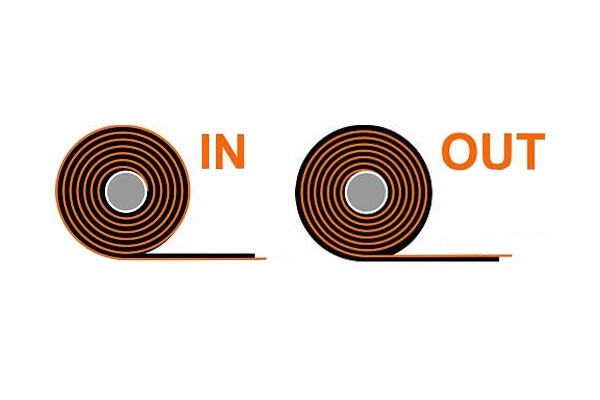
Every printer requires the correct winding direction – either OUT (ink side out) or IN (ink side in).
The difference lies in which side of the film the dye ink layer is located on:
-
For OUT winding, the coating layer is on the outside of the roll, i.e. facing outward from the core
-
For the IN winding, the coloring layer is on the inner side, closer to the core
This detail is important because the printhead must come into contact with the inked side of the ribbon, not its reverse side. So if you use a ribbon with the wrong winding direction, the color will not transfer to the label at all and the print will be blank or blurred.
Core size
When selecting a TTR ribbon, it is also necessary to pay attention to the core size (spool), i.e. the diameter of the opening around which the ribbon is wound.
Each printer is designed for a specific type of core, and if the wrong size is chosen, the foil will not fit properly or will not unwind evenly.The most common sizes are:
-
1/2" (12.7 mm) – smaller core, used in desktop label printers (e.g. Zebra GK, TSC, Godex)
-
1" (25.4 mm) – larger core, used in industrial label printers (e.g. Zebra ZT, Citizen CL-S, Honeywell)
The core size also affects the winding length – smaller cores hold shorter TTR film (e.g. 74 m), while larger ones can handle up to 300–450 m.
Summary: Always verify before purchasing TTR film.
..-
TTR ribbon material – wax, wax-resin, or resin (depending on the label material)
-
TTR ribbon width – it should be at least 2 mm wider than the label
-
Winding direction (IN/OUT) – must correspond to the type of label printer
-
Core diameter (spool) - 1/2" or 1" according to the label printer requirements
-
Roll length – so that the TTR thermal transfer ribbon roll fits into the label holder
Recommendation: Before purchasing, check the parameters of the existing TTR ribbon or the printer's technical documentation.